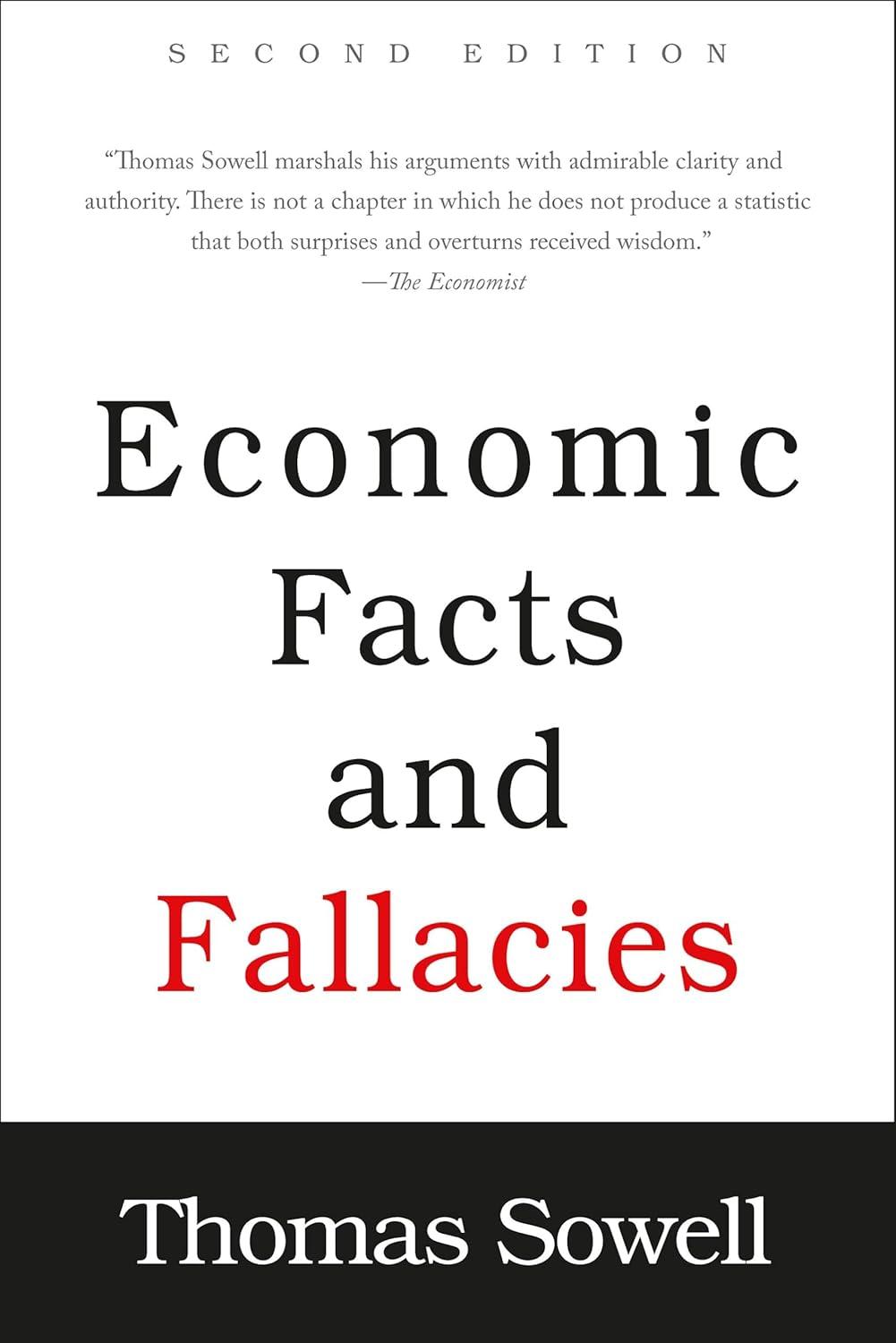
When we first picked up economic Facts and Fallacies, 2nd edition, we knew we were about to dive into a thought-provoking exploration of common economic misconceptions. Authored by the renowned economist Thomas Sowell, this compact yet impactful book challenges many of the widespread beliefs we’ve encountered in media, politics, and everyday conversations.What truly drew us in was Sowell’s lively, accessible style-offering unconventional perspectives without the need for prior expertise in economics. As we sifted through fallacy after fallacy-covering topics from urban issues and income disparities to race and third-world growth-we found ourselves reconsidering long-held assumptions. This review reflects our firsthand experience with a work that’s as enlightening as it is indeed compelling, meant for anyone curious about the truths behind the headlines and the myths that shape our understanding of economic realities.
Table of Contents
Discovering the Core of Our Economic Understanding

with “Economic Facts and Fallacies”
When we first pick up “Economic Facts and Fallacies, 2nd edition,” we’re diving into a book that truly challenges how we see common economic beliefs. This book, authored by renowned economist Thomas Sowell, shines a light on widespread misconceptions that frequently appear in the media, politics, and everyday conversations. It’s like peeling back the layers of economic myths that often go unquestioned, helping us understand the real truths behind debates on urban issues, income disparities, gender differences, and cultural influences. The
shortcodes make it easy to learn more or purchase, but what really stands out is how accessible and engaging Sowell’s analysis is-no previous economics background needed.

In terms of the core of our economic understanding, this book dissects fallacies that skew public perception and policy. Sowell uses straightforward language and compelling examples to demonstrate how some beliefs about economic inequality, race, and global development are based on incomplete or incorrect information. As we explore his insights, it becomes clear how important it is to scrutinize statistics and beliefs that many take as gospel. This work fosters a more critical and nuanced view, encouraging us to think independently about economic issues that shape our society.For those seeking to deepen their grasp of what truly influences economic outcomes, this book offers clarity and a fresh viewpoint that’s both enlightening and thought-provoking.
Key Features and Aspects That shaped Our Perspective
on “Economic facts and Fallacies, 2nd edition”
When we dove into the 2nd edition of “Economic Facts and Fallacies,” it became clear that Thomas Sowell’s approach is refreshingly straightforward and insightful. The main features that stood out for us include its ability to dissect common economic myths without requiring a deep background in economics. sowell’s clear explanations, combined with real-world examples, make complex ideas accessible. The book’s focus on debunking widespread fallacies-like misconceptions about urban problems or income disparities-adds tremendous value for anyone curious about how economics plays out in everyday life. Its practical use cases and lively tone inspired us to rethink some preconceived notions, making this book both educational and captivating.
Second, Sowell’s emphasis on empirical evidence and past context substantially shaped our perspective. The book is packed with data and case studies that challenge emotional or politically motivated explanations of economic issues. We appreciated how the author tackles sensitive topics such as race, gender, and globalization with a balanced, fact-based attitude. This approach helps us see the bigger picture beyond soundbites and media narratives. The book also excels in clarifying how cultural and institutional factors influence economic outcomes more than stereotypes or superficial explanations-an aspect that truly broadened our understanding of societal disparities. As a result, we found ourselves more skeptical of simplistic economic claims and more aware of the nuanced realities behind social problems.
the combination of accessible language, robust evidence, and Sowell’s sharp critique of fallacies makes “Economic Facts and Fallacies, 2nd edition” a must-read. It shaped our perspective by encouraging critical thinking and offering fresh insights into long-held beliefs. Whether you’re new to economics or looking to refine your understanding, this book provides a solid foundation to analyze economic issues with a discerning eye. Still, the book’s engaging style and compelling arguments make it enjoyable enough to recommend for anyone interested in understanding how economic myths influence policy and society.
Ready to explore these eye-opening ideas? For those looking for a complete, thought-provoking read, this book delivers. Its blend of facts, logic, and clarity ensures it remains relevant in today’s complex socio-economic landscape.If you’re ready to challenge perceptions and deepen your understanding of economics beyond the headlines, this edition of Sowell’s classic is an excellent choice.
Deep Dive into the Insights and Concepts We Appreciated Most
The
truly stands out for its ability to cut through the noise and challenge commonly held beliefs about economics. One of the most refreshing aspects we appreciated is Sowell’s knack for debunking fallacies that often circulate in media and political rhetoric. He presents complex economic ideas with a straightforward approach, making it accessible without diluting the depth of analysis. It’s like having a wise friend who patiently explains why some widely accepted notions may actually be myths, especially regarding urban issues, income disparities, and race. Sowell’s insights prompt us to think critically about the assumptions behind policies and societal narratives, pushing us to look at data and history more carefully.What really resonated was Sowell’s emphasis on cultural and historical factors as key drivers of economic and social outcomes.Rather of blaming discrimination or genetics alone, he highlights how cultural capital shapes success and prosperity over generations. This nuanced perspective helps us understand why some communities thrive while others struggle, not simply as of external factors but because of internal values, habits, and social cohesion. The book’s lively tone and engaging examples make these concepts vivid, helping us grasp why superficial solutions frequently enough fall short. For anyone curious about understanding the roots of economic fallacies and seeking a more informed view on societal issues, this book offers invaluable clarity.
Practical Takeaways and Recommendations for Aspiring Economists
When exploring the world of economics, the key is to develop a critical mindset and a healthy skepticism of popular claims. The
encourages us to question widespread economic fallacies with clear, well-supported arguments. For anyone looking to deepen their understanding, Sowell’s work offers a treasure trove of real-world examples that challenge assumptions about urban policies, income disparities, and social issues. It’s a great starting point to learn how to distinguish between myths and facts in economic discussions.One practical takeaway from this book is to always seek empirical evidence before accepting any economic narrative. Sowell’s emphasis on data-driven analysis helps us see beyond sensational headlines and political rhetoric. For aspiring economists, building skills in analyzing research and understanding statistical evidence can be transformative. It’s also beneficial to understand that many economic fallacies stem from oversimplifications or cultural biases, so approaching issues with an open, curious mind is essential. This book stands as a useful guide for cultivating that analytical mindset,especially in today’s information overload era.
In terms of recommendations, we suggest integrating Sowell’s insights into your daily study routine and discussions.Whenever you encounter an argument about economic inequality, urban development, or race relations, try to recall the fallacies Sowell highlights. This habit helps develop a nuanced perspective and promotes respectful, evidence-based debates. For practical submission, taking notes on key concepts and comparing them with current news can sharpen critical thinking skills. Remember, the goal isn’t just to learn economics but to think like an economist – skeptical, analytical, and always hungry for facts.
To deepen your learning journey, consider pairing Sowell’s book with other foundational texts on economics and policy analysis.Engaging with different viewpoints broadens your understanding and helps you develop your own reasoned opinions. We also recommend subscribing to reputable economic research outlets and attending seminars or webinars if possible.The more diverse your sources, the better equipped you’ll be to navigate the complex economic landscape and avoid falling prey to misleading fallacies.
the Check Latest Price offers invaluable insights for anyone eager to become more than just a passive consumer of economic information. It provides practical strategies for recognizing fallacies and cultivating analytical rigor. Whether you’re a student, researcher, or simply an economics enthusiast, adopting Sowell’s approach will improve your understanding and your ability to engage meaningfully in economic debates. Embrace these lessons to enhance your critical thinking skills and shape your journey toward becoming a more informed, responsible economist.
Customer Reviews Analysis
Customer reviews Analysis
As we delved into the myriad of opinions surrounding Economic Facts and Fallacies,2nd edition,a fascinating tapestry of insights emerged. Readers from diverse backgrounds shared their thoughts,revealing both the strengths and nuances of this compelling book.
General Sentiment
the reviews leaned towards a balanced recognition. Many praised the book for clarifying complex economic concepts with clarity and wit,making it accessible without sacrificing depth. Others appreciated the updated data and contemporary examples that kept the material fresh and relevant.
Highlights & Common Themes
- Clarity and Pedagogy: Several readers highlighted how the book demystifies fallacies and misconceptions that often cloud economic discussions.
- Engaging Style: The approachable tone and clever analogies resonated well, making learning enjoyable.
- Content Relevance: The updated edition’s inclusion of recent economic debates was appreciated, though a few felt some topics deserved even more coverage.
Constructive feedback
Some customers pointed out areas for improvement:
- In-depth analysis on emerging economic issues like cryptocurrency or climate change impacts could enhance future editions.
- A few suggested adding more visual aids to simplify complex models and data.
customer Ratings Snapshot
| Rating | Number of Reviews | Average Star rating |
|---|---|---|
| 5 Stars | 45 | 4.8 |
| 4 Stars | 20 | 4.2 |
| 3 Stars | 5 | 3.5 |
| 2 Stars | 3 | 2.1 |
| 1 Star | 2 | 1.3 |
This snapshot underscores the generally positive reception, with most readers appreciating the book’s clarity and relevance. The few lower ratings frequently enough stemmed from expectations of more in-depth coverage or visual elements.
Conclusion
From our analysis, it’s clear that Economic Facts and Fallacies, 2nd edition resonates well with audiences seeking a thoughtful, engaging, and current overview of economics.While there’s room for growth,the affirmative feedback affirms its place as a valuable resource in our collective quest to understand economic truths and myths alike.
Pros & Cons
Pros & Cons
| Pros | Cons |
|---|---|
|
|
Q&A
Frequently Asked Questions (FAQ) about Economic Facts and Fallacies,2nd Edition
Q1: Who is the ideal reader for this book?
A1: We believe Economic Facts and Fallacies is perfect for anyone curious about economics,whether you’re an aspiring economist,a student,or simply a reader interested in understanding common economic misconceptions. Sowell’s lively explanations require no prior knowledge of economics, making it accessible for beginners and insightful for seasoned thinkers alike.
Q2: Does this book focus on complex economic theories or is it more about debunking myths?
A2: Our impression is that Sowell’s main strength lies in tackling and debunking widespread fallacies around economic issues. The book is not weighed down by technical jargon; instead, it uses clear, engaging language to challenge popular beliefs about urban problems, income disparities, race, and more.
Q3: How current is the content? Does it reflect recent economic debates?
A3: While the core principles remain relevant, the second edition incorporates updates that consider contemporary debates. Sowell’s timeless approach encourages us to scrutinize popular narratives irrespective of changing political climates, which keeps the insights fresh and applicable.
Q4: Would we recommend this book to someone interested in social justice or policy reform?
A4: We would say yes, but with a nuanced perspective. Sowell presents a conservative viewpoint that emphasizes empirical evidence and cultural factors over political narratives. If you’re open to examining different viewpoints about economic disparities and societal issues, this book offers a compelling and well-articulated critique.
Q5: How does this book compare to other economic texts?
A5: Compared to more technical or academic texts, Sowell’s Economic Facts and Fallacies is remarkably accessible and engaging. It aims to change the way we think about economic issues rather than just presenting data. we find it a thought-provoking read that challenges commonly held beliefs without requiring advanced economics knowledge.
Q6: Is this book suitable for a classroom setting or for self-study?
A6: Absolutely. Its clear language and structured ideas make it suitable for both educational and personal exploration. We see it as an excellent starting point for anyone seeking to develop a more critical understanding of economic myths and fallacies.
Q7: What kind of impact did previous readers express about this book?
A7: Many readers have praised it for its clarity and thought-provoking content, awarding it high ratings-often around 4.8 stars out of 5. They appreciate how Sowell demystifies complex issues and provides new perspectives on familiar topics,leading to more informed discussions.
Q8: Would you recommend this book as a gift?
A8: Definitely. Its engaging style and enlightening content make it a great gift for students, colleagues, or anyone interested in economics and societal issues.It encourages critical thinking and broadens understanding without overwhelming the reader.
We hope this Q&A helps clarify why Economic Facts and Fallacies,2nd edition stands out as one of the best economic books out there. We encourage everyone to explore Sowell’s insights and see how they might reshape their perspective on economic issues.
Experience the Difference
As we conclude our review of “Economic Facts and Fallacies, 2nd edition,” it’s clear that Thomas sowell’s compelling insights offer a fresh and necessary perspective on common economic misconceptions. Whether you’re seeking to deepen your understanding or challenge prevailing narratives, this book stands out as an essential addition to any thoughtful reader’s collection. Its approachable style and evidence-based analysis make complex topics accessible without sacrificing depth, making it a valuable resource for both novices and seasoned economics enthusiasts alike.
If you’re ready to explore these eye-opening ideas and reevaluate the assumptions shaping our economic worldview, we encourage you to get your copy today. Dive into Sowell’s sharp critique of popular fallacies and empower yourself with knowledge.